
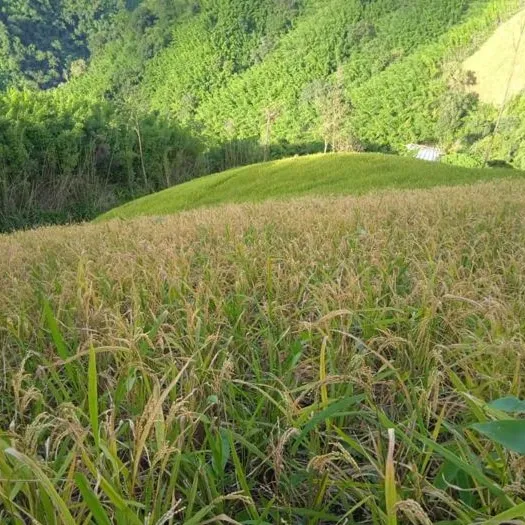
Shifting Cultivation
Shifting cultivation is fundamentally linked to the way of life for the Leetu Chin. This work is really vital to the Leetu Chin community. The Leetu Chin identifies suitable sites for shifting cultivation on the lower mountain slopes and allocates plots among the community.
After that, they cut down the bamboos in their plots during January and February and let them dry throughout March and April. Then, they burn the bamboo that are cut down in May and remove any unburnt pieces from the plots.
Unburnt pieces are some bamboos that cannot be burnt by fire which are removed from the ground for planting. After removing all the leftover unburnt pieces from the surface of the ground, they build a small tent which are to be rested at the time of sowing paddy seeds and various vegetables seeds. After that, sowing season begins. The time is limited that the sower must finish sowing by the full moon of June.
After the full moon of June, the sowing period is over. On that month, if the sowing is not fully completed, the seeds cannot properly be sprout out. Even if the plant come out of the seed, the plan that emerge will likely poor or weak.
In July, when the small paddy leaves curve gracefully like the brim of a cap across the fields, the crop is finally ready for weeding. By the end of August, once the paddy has blossomed and the grains are full, a shelter is built to keep watch and protect the crop from birds.
After that, bamboo clappers connected by a series of ropes must be constructed to frighten away the birds." The series of ropes from the bamboo clappers need to pull to the tent. It is the guard work to watch over the paddy field from the time of bearing grains to till harvesting is over.
The fields turn golden in September as the paddy ripens; it is during this time that the new rice is finally ready for eating. Therefore, there is saying, "We can't eat very much in September, but in October, there is plenty of food for everyone."
By November, the harvest is complete and the grain is safely stored in barns. Thus, the annual cycle of Leetu Chin shifting cultivation comes to a close.
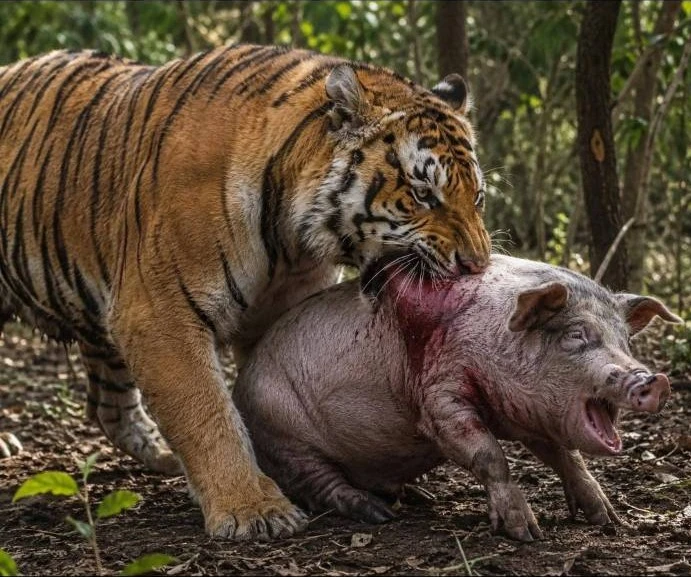
Tiger and Pig counting the stars
Long long ago, a tiger and a pig lived together as the closest of friends. One night, while gazing up at the velvet night, the tiger said, "Let's count the stars in the sky." "Upon hearing the tiger's idea, the pig replied, 'Sure, let's do it!'"
So, the tiger promised that whoever lost the star counting contest would be eaten. He accepted on what tiger said without thinking carefully. So, the tiger said to the pig, “Friend, you will count the stars at night. I promise that I will count them in the morning.” The pig replied without thinking to tiger “I will count the stars at dawn.”
After saying that, the tiger said to the pig, "You must count the stars from dark to midnight. I promise to count from midnight to dawn."
So, the pig started counting from the time the stars first appeared in the evening. The stars appeared only a few times in the early evening, but as the night progressed, they became more and more visible. That's why the pig couldn't count all the stars.
As midnight approached, the tiger looked up at the sky and counted the stars. As the morning dawned, the stars gradually became fewer and fewer and disappeared. Finally, the tiger pointed to the last morning star and showed the pig that he could count all the stars.
So, the tiger told the pig that as you lose the star counting contest, I will eat you, as we had promised long ago, the tiger immediately killed the pig. That is why to this day, tigers kill and eat pigs whenever they see them.
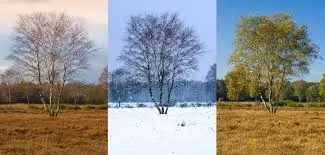
The Three Seasons
Although we learned in Burmese textbooks that there are three seasons counting summer season, rainy season, and winter season, the Letu people count three seasons in a year in a different way: winter, summer, and rainy season. Each season lasts four months.
The four months of winter are November, December, January, and February. During this time, it is very cold with snow. The water in the rivers is very cold and clear, and there are many rock frogs in the streams. The sedge flowers are blooming in abundance on the trees. During this time, farmers start to clear their fields. The sky is clear, and the forests and water are green. The cold north wind blows and it is very cold.
The four months of the months of March, April, May, and June are the summer months. In that month, the red flowers also bloom. The forests and mountains are covered with mist, making it very hot. When Tagu arrives, farmers burn the fields. The old leaves fall from the trees and bamboos growing all over the forests and mountains, and new leaves come out. The rivers and lakes dry up, and fish come out. The villagers go to the streams to eat wild rice and wild vegetables. During this time, the sky becomes thick with clouds. Therefore, it is said that the thick clouds indicate that the rain will begin in the month of Kason. At this time, the caterpillars hatch. The dragonflies also make a loud noise everywhere.
The four months of July, August, September, and October are the rainy season. During this season, strong winds blow and heavy rain falls. The rivers and streams are also turbulent. The trees and bamboos that grow on Mother Earth are also very happy because of the rain that has fallen. At this time, the forests and mountains are very beautiful, and the vegetables that can be eaten are also very abundant. The streams and rivers are also very abundant. The people who harvest the rice in the upland fields also offer the first fruits to the Creator at the rice harvest feast and eat them with joy.
In this way, the Letu Chin people end the year.
